


Cat Sleeping In Litter Box?
Our quick take: a cat who lies or sleeps in the litter box is usually sick, stressed, guarding the box from another cat, or new to your home (shelter cats often learned to sleep beside their box in a small cage). If your cat, especially a male, keeps squatting or straining in the box and little or no urine comes out, it's an emergency: a blocked bladder can kill within a day or two, so go to a vet now. Otherwise, rule out illness with your vet, add litter boxes (one per cat plus one), and give your cat a cozy, quiet hiding spot away from the box.
Noticed cat sleeping in litter box? Would you sleep in your bathroom? Quite likely, the answer would be “not under normal circumstances.” Your cat is the same way.
If your cat is sleeping in the litter box, the circumstances are clearly not normal. Cats can be near obsessive about their cleanliness, so if Kitty is napping in the litter box, something is very wrong.
As the pet parent, it is your responsibility to figure out what is making your cat uncomfortable and find a feasible solution to your pet's discomfort.
Here are the five most common abnormal circumstances that might make Kitty think her litter box is a good place to take a nap and how to troubleshoot the problem.
Could Kitty be Sick?
First things first: see if Kitty is sick. After all, a reason a human might have for spending a night in the bathroom is an upset stomach or partied a little too hard. An ill or injured cat might think getting out of the litter box just isn't worth the effort.
Is Kitty straining or having diarrhea? Are there things that look like crystals in Kitty's urine? Is she lethargic or uninterested in eating? A change in litter box habits is a common symptom to many ailments in cats.
Watch your cat closely for symptoms so you can report them to the veterinarian. You may be asked to bring in a stool sample.
It could be a bladder problem, constipation or diarrhea, or it could be that Kitty has been eating something she's not supposed to. Cats with kidney disease or diabetes pee much more than usual and may camp in or near the box, and older cats with arthritis or cognitive decline may lie down there because climbing out is hard work. Ask your veterinarian what should be done to make Kitty feel better. It helps to know how often cats normally pee and how often they poop.
Urinary blockage is an emergency. Male cats have a narrow urethra that can be plugged by crystals, mucus or small stones. A blocked cat goes in and out of the box, strains with little or no urine, may cry, lick his genitals, vomit or hide. Without treatment the toxins build up and can stop the heart within a day or two, so don't wait to see if it passes. Female cats rarely block, but straining, peeing small amounts often or blood in the urine still needs a vet visit within a day.
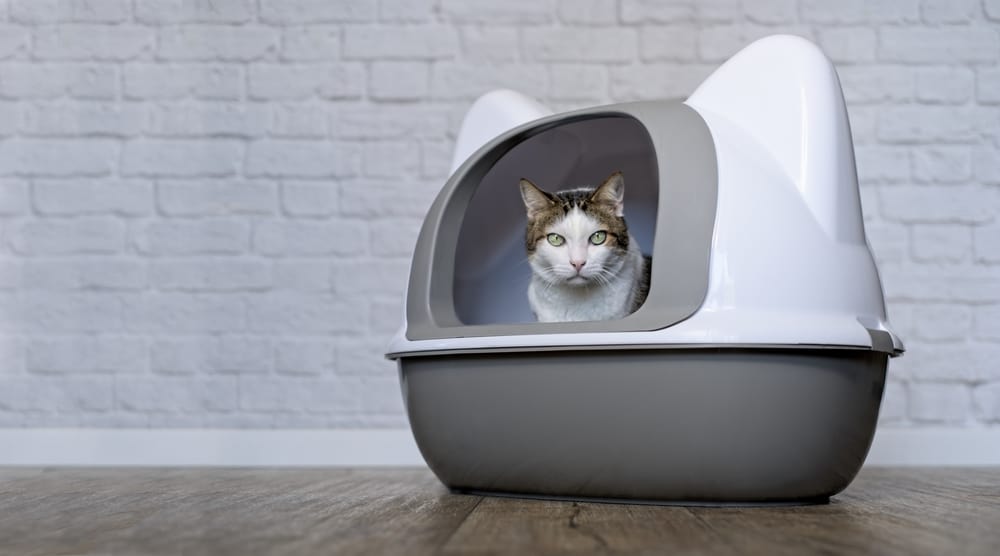
Is Someone Expecting Kittens?
Ladies, if you've been pregnant, you've probably felt like you were living in the bathroom. Not only does it seem like something always wants to come out one end or the other, just moving in the later months can feel like a chore.
Now imagine you have no arms, the father is off somewhere chasing a squirrel up a tree and there could be anywhere from three to seven babies inside you.

If Kitty is an unaltered female with access to an intact male, she might turn up pregnant. She might think her litter box is a good place to give birth, particularly if it's enclosed. It most certainly is not. In fact, the kittens might get sick easily exposed to so much filth.
Provide her with a comfortable, quiet nesting box (a cardboard box lined with towels works) in a warm spot near, but not next to, the litter box, with food and water nearby, and have your vet check her. Here's how to tell when your cat is in labor.
A Case of the Dog (Cat) in the Manger (Litter Box)
OK, outside of an unthinkable apocalyptic scenario, it's unlikely you'll ever have to guard your bathroom to keep others away from it. Cats, however, can be incredibly possessive. Like Aesop's dog in the manger, a cat might lay in a litter box for no reason other than to keep others from using it.
If there are other cats in the house, one cat may decide the litter box is hers and no one else's. Conversely, she may be the one being bullied and is just assuring she can use the litter box. She may be so obsessed with guarding what she feels is her territory she may nap in her litter box.
The solution is to have multiple litter boxes. You should have at least one litter box for each cat with one or two extra just in case. When Kitty realizes there's plenty to go around, she might not feel so possessive.
In My Safe Space….
If you live in a place prone to tornadoes, hurricanes or severe storms, you may have been advised to take shelter in a room with no windows. In many houses, this is the bathroom. If a cat feels scared, they want to go some place quiet and secluded. In many houses, this is where the litter box is.
In a shelter situation, it may be the only place that feels safe. A cat's favorite hobby is sleeping, but Kitty will only sleep when and where she feels safe. What is scaring Kitty? Other animals? Frequent guests? Loud noises?
If you can't get rid of what frightens Kitty you can at least provide her with an alternate safe space to go to. A cardboard box or pet carrier with a fluffy blanket or favorite toy might be comfortable.
Related: Check out our choices for the best self-cleaning litter boxes here
Sometimes, There's Only One Place That Feels Normal
Cats like routine. They don't like change. If there is a sudden change in your household like remodeling or a new pet or child, Kitty may be having a hard time dealing with all of this and may retreat to the one place that's comfortable and familiar. Namely, her litter box.
Newly adopted cats are a special case. Many shelter and rescue cats spent weeks in a small cage where the litter box sat right beside the bed, so lying in or next to the box can be a habit rather than a sign of illness. Start a new cat in one quiet room with a bed, a hiding box and the litter box at opposite ends, and the habit usually fades as she settles in.
Conversely, if the litter box itself is changed with a different type of litter (crystals, clumping, low tracking, toilet disposable, etc.), Kitty might think her litter box has somehow transformed into a place to sleep.
Admit it, you've probably made yourself a little too comfortable on occasion to leave the toilet with magazines or smartphones.
Kitty likewise might be amusing herself by toying with the sand beneath her paws like a toddler in a playground sandbox. As with the above, the solution is to provide someplace else that's both safe and clean to hide.

In Conclusion….
Look at things from your cat's point of view. While a quiet and secluded spot is ideal for a litter box, it's also ideal for a catnap. Kitty has to learn there are quiet spots for eliminating, quiet spot for napping and never the twain shall meet. A sick, pregnant or nursing cat may need a sleeping space close to the litter box, but certainly not in it.
Pay attention to Kitty, learn her needs and you will have a happy cat. If she has started going outside the box as well, see our guide to why a cat stops using the litter box.
When To Call Your Vet
- Now (emergency): straining with little or no urine, crying in the box, vomiting or collapse, especially in a male cat.
- Within a day: blood in the urine, diarrhea or no stool for more than two days, not eating, hiding, or a pregnant cat who seems unwell.
- Soon: any cat who keeps lying in the box for more than a day or two without an obvious reason such as a new home, new pet or a stressful event.
Sources
- Cornell Feline Health Center: Feline Lower Urinary Tract Disease
- International Cat Care: Anxious cats


