


If I had to describe Feline Natural cat food in one phrase, it would be “meat first, without the fluff.” This New Zealand-based brand has built its reputation around recipes that lean heavily on animal ingredients, including beef, chicken, lamb, king salmon, venison and hoki. Its foods are grain-free and generally low in carbohydrates, with wet and freeze-dried options that look much closer to what I expect from a species-appropriate feline diet than a typical bowl of dry kibble.
But premium ingredients don't automatically make a food perfect. Feline Natural is expensive, some recipes are relatively rich and the brand's emphasis on high-quality meat means you need to be comfortable paying more for what is essentially a more meat-forward feeding approach.
My Quick Verdict
Feline Natural is one of the better choices I would consider for cat owners who prioritize high-quality animal protein, low carbohydrates and minimally processed ingredients. I particularly like the wet and freeze-dried formulas for cats that do well on meat-rich diets. The biggest drawback is price, followed by the fact that richer recipes may not suit every cat.
My overall rating: 9.1/10
Pros
Excellent variety of animal proteins
Grain-free and gluten-free recipes
Low-carbohydrate approach
High proportion of animal-sourced ingredients
No artificial colors, flavors or preservatives
Beef, chicken, lamb, venison, salmon and hoki provide useful protein rotation
Freeze-dried options are convenient for owners wanting a less processed-feeling diet
Hoki is associated with sustainable sourcing through Marine Stewardship Council certification in the brand's range
Strong ingredient transparency compared with many conventional foods
Cons
Some recipes are relatively high in fat
Not every cat needs such a rich diet
Significantly more expensive than conventional kibble
Freeze-dried food must be handled and prepared properly
Availability can vary depending on where you live
My Feline Natural Scorecard
| Category | Score |
|---|---|
| Ingredient Quality | 9.6/10 |
| Animal Protein Quality | 9.7/10 |
| Protein Variety | 9.5/10 |
| Carbohydrate Profile | 9.4/10 |
| Digestibility | 9.1/10 |
| Moisture Options | 9.5/10 |
| Recall History | 9.5/10 |
| Value for Money | 7.8/10 |
| Overall | 9.1/10 |

What Is Feline Natural Cat Food?
Feline Natural is a New Zealand pet food brand focused on highly meat-based nutrition. Its cat foods are available primarily as wet/canned and freeze-dried diets, rather than relying on conventional extruded kibble as the foundation of the range.
That distinction matters.
When I compare Feline Natural with a typical dry cat food, I'm not just looking at the first ingredient on the label. I'm looking at the overall formulation and how much of the diet is built around animal ingredients versus starches and other carbohydrate sources.
Feline Natural's philosophy is much closer to:
animal protein → animal fats → essential nutrients → minimal carbohydrate
rather than the traditional kibble approach of combining meat ingredients with a substantial amount of starch to create an extruded, shelf-stable pellet.
Technical specifications
Notable ingredient: Hoki, including sustainably sourced options
Food types: Wet and freeze-dried
Protein sources: Beef, chicken, lamb, king salmon, venison and hoki
Grain-free: Yes
Gluten-free: Yes
Artificial colors: None
Artificial flavors: None
Artificial preservatives: None
Carbohydrate approach: Relatively low carbohydrate
Animal protein: Central focus of the formulas
Manufacturing origin: New Zealand-focused brand
Feline Natural Cat Food Review
1. Lamb & Venison Feast
First 5 ingredients: Lamb, Lamb Tripe, Venison, Lamb Heart, Lamb Lung
Made with grass-fed lamb and venison, this nutrient-dense freeze-dried recipe provides high-quality animal protein to help cats maintain lean muscle, support healthy growth and development, and aid tissue repair.
Grass-fed lamb is naturally rich in omega-3 fatty acids, which help promote healthy skin and a glossy, shiny coat, while venison provides valuable B vitamins to support energy metabolism and everyday vitality.
The recipe also delivers a balanced source of omega-3 and omega-6 fatty acids to support brain function, skin and coat health, and healthy joints. Its carefully selected animal ingredients—including lamb tripe, heart, lung, liver, kidney and New Zealand green mussel—provide a variety of naturally occurring nutrients for overall wellness.
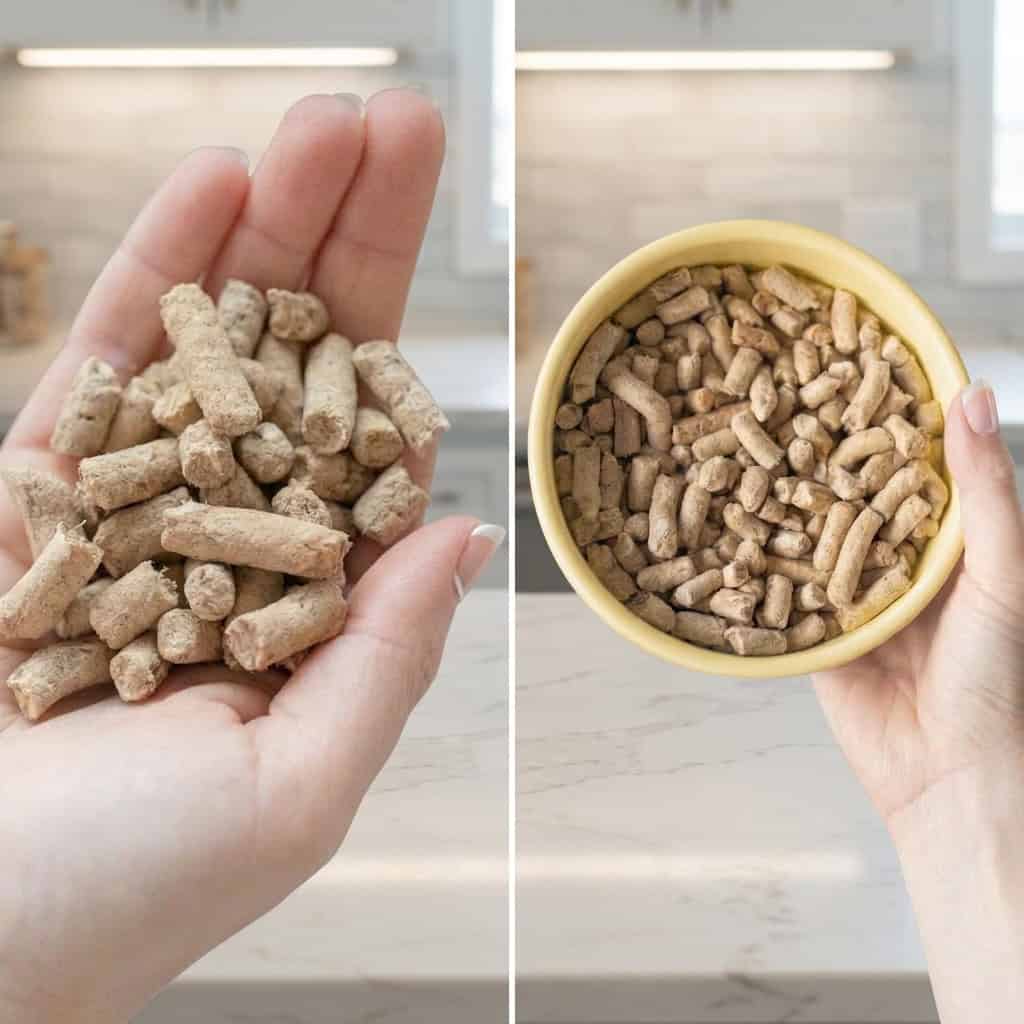
Freeze-drying preserves the ingredients' nutritional value while offering the convenience of a raw-style diet that's ready to serve. It is free from grains, gluten, GMO ingredients, dairy, rice, soy, cereals, potato, fillers and legumes, making it a simple option for cats with sensitive digestion or owners looking for a clean, meat-focused diet.
2. Beef & Hoki Feast
First 5 ingredients: Beef, Beef Heart, Hoki Fish, Beef Tripe, Beef Kidney
This protein-rich recipe combines beef and hoki fish to create a nutritious, balanced meal for cats of all life stages. High in DHA, it supports healthy brain and eye development, making it especially beneficial for growing kittens and aging cats. Its low-fat, high-protein formula also helps maintain lean muscle and a healthy body weight.
Made with quality animal ingredients including beef, beef heart, hoki fish, tripe, kidney, liver and lung, it provides essential nutrients for overall health and vitality. New Zealand green mussel adds additional nutritional value to this meat-and-fish blend.
Freeze-dried for convenience, it offers the nutritional benefits of a raw-style diet without the preparation, making it ready to serve straight from the package. It's also free from grains, gluten, GMO ingredients, dairy, rice, soy, cereals, potato, fillers and legumes for a clean, digestible meal.
3. Chicken Feast Canned
First 5 ingredients: Chicken, Water Sufficient For Processing, Chicken Liver, New Zealand Green Mussel, Hoki Oil
Made with quality chicken as the primary ingredient, this meat-rich, low-carbohydrate recipe provides a nourishing source of protein to help support strong muscles, healthy skin and a glossy coat. Fresh New Zealand water is added for extra moisture, making it a flavorful option for cats that need more hydration in their daily diet.
The recipe also includes nutrient-rich chicken liver, New Zealand green mussel, hoki oil, dried kelp, taurine and flaxseed flakes to provide additional nutritional benefits for overall wellness.
Naturally grain-free and made without fillers, it contains no BPA, dairy, rice, soy, cereals, potato or legumes, making it a simple, meat-focused choice for cats.
4. Lamb & King Salmon Pouch
First 5 ingredients: Lamb Heart, Water Sufficient for Processing, Salmon, Lamb Lung, Lamb Liver
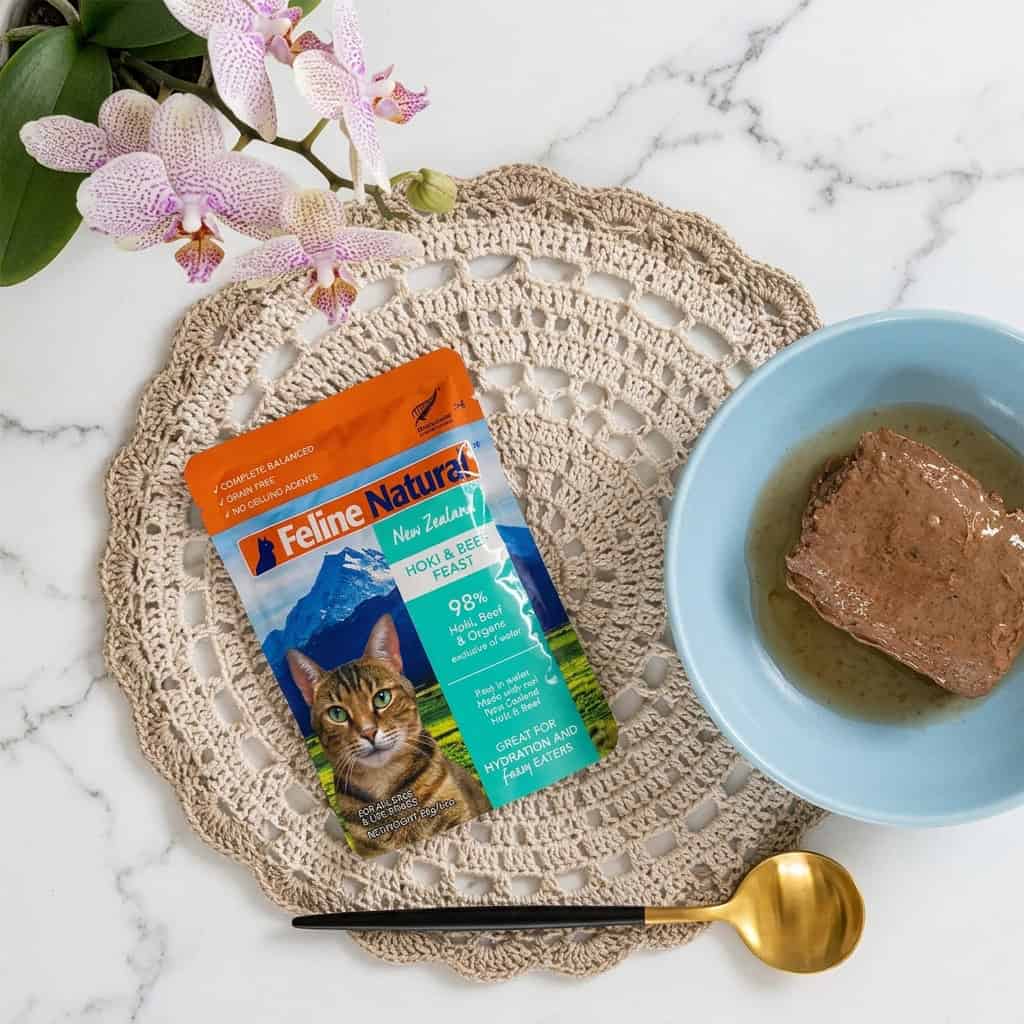
Made with a savory blend of lamb and salmon, this grain-free wet recipe offers a nutrient-rich, meat-focused meal that's especially convenient for picky eaters. Each single-serve pouch delivers wholesome animal protein and moisture, while being free from gelling agents, binders and gums for a simple, natural texture.
Lamb heart provides quality protein and essential nutrients, complemented by salmon, lamb lung, liver and kidney for a variety of nourishing animal-based ingredients. New Zealand green mussels and dried kelp add further nutritional value, helping make this a satisfying and balanced option for cats. The convenient pouch format makes serving easy, whether used as a complete meal or a tasty addition to your cat's regular diet.
5. Lamb Green Tripe Freeze-Dried Topper
First 5 ingredients: New Zealand Grass-fed Lamb Green Tripe
Made with a single premium ingredient—New Zealand grass-fed lamb green tripe—this freeze-dried topper is a nutrient-rich way to enhance your cat’s everyday meals. Green tripe is naturally packed with beneficial nutrients that can support healthy digestion, skin, coat, immune function and overall well-being.
Freeze-dried to help preserve its natural nutritional value, this simple topper is an excellent choice for adding extra flavor and nourishment to your cat’s food. Made in New Zealand with locally sourced lamb tripe and no GMO ingredients, it offers a wholesome, single-ingredient option for cats of all life stages.
6. Beef Healthy Bites
First 5 ingredients: Beef, Beef Liver, Beef Kidney, Beef Heart
Made in New Zealand with 100% wholefood, locally sourced ingredients, these freeze-dried treats offer a simple and nutritious reward for cats. The limited-ingredient recipe combines beef with nutrient-rich beef liver, kidney and heart, providing wholesome animal protein and natural nutrients without unnecessary extras.
Freeze-drying helps lock in nutritional goodness while creating an irresistible texture and flavor cats love. Grain-free, gluten-free and guilt-free, these treats contain no unnecessary fillers or ingredients your cat doesn't need. With just four quality ingredients, they’re a delicious, protein-rich way to reward your feline companion while keeping treat time simple and wholesome.

The “Meatier” Approach
This is the part of Feline Natural that interests me most.
Cats are obligate carnivores, so I generally prefer seeing a cat food built around recognizable animal ingredients rather than a formula where the meat is accompanied by a long list of plant ingredients.
Feline Natural doesn't simply use one generic “meat” source either. Its recipes give owners several animal proteins to rotate between.
And that's important because protein variety isn't just about making the food interesting.
Different meats provide different amino-acid profiles, fatty acids, micronutrients and palatability characteristics.
Beef
Beef is a useful source of highly digestible animal protein and provides nutrients such as iron, zinc and vitamin B12.
I particularly like beef-based recipes for healthy adult cats that enjoy red meat and need a calorie-dense food.
The downside? Beef isn't automatically better for every cat. If your cat has a suspected beef intolerance, I wouldn't choose it simply because it appears high on the ingredient list.
Chicken
Chicken is probably the most familiar protein in the range.
It's a highly digestible source of animal protein and can help provide the amino acids cats need to maintain muscle tissue.
Chicken also tends to be highly palatable, making it a practical option for cats that are difficult to feed.
The catch is that chicken is also a relatively common protein in commercial cat food. If you're using an elimination diet for a cat with suspected food sensitivities, a chicken-based recipe may not be the most useful starting point.
Lamb
Lamb gives Feline Natural some additional protein diversity.
It's a nutrient-dense animal protein and can be a useful alternative for cats that have eaten chicken or fish-based diets for years.
I also like seeing lamb as part of a rotation because it gives owners another option without automatically reaching for another poultry recipe.
King Salmon
This is one of the more interesting proteins in the lineup.
Salmon contributes high-quality animal protein as well as omega-3 fatty acids, particularly EPA and DHA.
Those fatty acids are important for normal skin and coat health and support other physiological functions.
This is one reason fish-based formulas can be particularly appealing when I'm looking for a food that may help support a healthy-looking coat.
Of course, more fish isn't necessarily better. Cats don't need an exclusively fish-based diet, and I prefer using fish as part of a broader protein rotation.

Venison
Venison is the more novel protein here and can be particularly interesting for cats that have eaten conventional chicken- and beef-based foods for years.
It's a lean animal protein and provides another way to diversify a cat's diet.
For cats with suspected food allergies, though, I'd emphasize one important distinction:
A novel protein can be useful during an elimination diet, but a commercial venison recipe containing several other animal proteins isn't necessarily a true elimination diet.
That distinction gets overlooked surprisingly often.
Hoki
Hoki is probably the ingredient that makes Feline Natural stand out from many mainstream cat foods.
This New Zealand fish is used as an animal protein source and is also notable because Feline Natural has promoted sustainably sourced hoki, including Marine Stewardship Council-certified sourcing.
From a nutrition perspective, hoki contributes animal protein and marine-derived nutrients.
From a sustainability perspective, it's an interesting alternative to simply relying on more common fish species.
What Does “Ethically Sourced and Traceable” Actually Mean?
This is where I think pet owners should look beyond marketing language.
When a pet food company talks about ethical sourcing, I want to know whether that translates into something meaningful: where the ingredients originate, how animals are raised or caught, whether suppliers can be identified, and whether sourcing standards are independently verified.
Feline Natural emphasizes New Zealand-sourced ingredients and sustainable animal ingredients, including its hoki sourcing.
That's a positive.
But I wouldn't tell readers that “ethically sourced” automatically means the food is nutritionally superior. Ethical sourcing and nutritional adequacy are two different questions.
For me, the real advantage is that Feline Natural's sourcing philosophy complements an already strong formulation rather than being the only reason to buy the food.
Performance Metrics: What Might You Notice?
Nutrition isn't magic, and I wouldn't promise that changing to Feline Natural will transform every cat overnight.
However, when cats move from a highly processed, carbohydrate-heavy diet to a highly digestible, meat-focused diet, owners may notice several changes.
Coat Shine
This is one of the first things I'd watch.
Adequate protein and dietary fat, combined with omega-3 fatty acids from ingredients such as salmon, can support healthy skin and coat condition.
A softer, shinier coat can be a positive sign that a cat is receiving appropriate nutrition, although coat quality is also influenced by genetics, grooming, hydration and overall health.
Energy Levels
A good diet provides the amino acids and calories a cat needs to maintain muscle and normal activity.
Some owners notice their cats become more enthusiastic about meals and appear more energetic after switching to a highly palatable, nutrient-dense food.
I'd be careful about attributing every increase in activity directly to the food, though.
Stool Quality
This is one of my favorite real-world metrics.
A food that agrees with a cat generally produces stools that are:
- Formed
- Consistent
- Relatively easy to pass
- Not excessively large
- Less likely to contain obvious undigested material
Feline Natural's meat-focused, relatively low-carbohydrate formulation can work very well for cats that don't tolerate large amounts of carbohydrate or certain plant ingredients.
That said, any dietary transition can temporarily change stool quality, so I'd transition gradually.
Allergy Reduction
This one requires more caution.
Feline Natural offers several different proteins, including less-common options such as venison and hoki. That can be helpful when trying to identify foods a cat tolerates well.
But Feline Natural should not be considered an allergy treatment.
If your veterinarian suspects a food allergy, a properly controlled elimination diet is much more appropriate than simply switching between commercial recipes.
Product History & Recall Record
This is an area where I always recommend separating the cat food line from other products made by the same company.
Based on the recall databases and sources I checked, I could not find a reported recall of Feline Natural cat food since the brand's cat-food history began. Pet Food Sherpa likewise reports no Feline Natural recalls since 2011.
However, there is an important piece of historical context.
A previous review notes that Feline Natural's parent brand had a 2018 recall involving dog food due to possible Listeria contamination, rather than a Feline Natural cat-food recall.
I would therefore describe the brand's cat-food recall history as very strong, but not use that as proof that the food can never have a safety issue.
Pet-food recalls can happen to any manufacturer, which is why I recommend checking current FDA recall notices rather than relying on an old review. The FDA maintains an active recalls-and-withdrawals database for animal foods and other veterinary products.
My takeaway: This brand has an excellent cat-food recall record based on the information currently available, but responsible pet owners should still check lot numbers and current recall notices periodically.
Who Should Feed Feline Natural Cat Food?
Despite the wording in your brief, I'd use “Who Should Feed Feline Natural Cat Food?” here rather than “Open Farm” so the heading matches the search intent and avoids confusing two different brands.
I would consider it for:
- Cats whose owners prioritize meat-forward nutrition
- Those that enjoy wet or freeze-dried food
- Felines that do well with relatively low-carbohydrate diets
- Healthy adult kitties needing a nutrient-dense diet
- Cats that benefit from additional dietary moisture
- Owners interested in rotating animal proteins
- Owners willing to spend more on premium cat food
I would be more cautious if:
- Has a history of pancreatitis or needs a specifically restricted-fat diet
- Has diagnosed food allergies requiring a strict elimination diet
- Your cat needs a veterinary therapeutic diet
- Your budget doesn't allow for long-term premium food
- Your kitty refuses wet or freeze-dried textures
And if your cat has a diagnosed medical condition, I'd put the veterinarian's nutritional recommendation ahead of any premium-brand marketing claim.

How I Would Feed It
If you're switching from conventional kibble, I wouldn't dump a bowl of Feline Natural beside the old food and expect everything to go perfectly.
Cats can be surprisingly resistant to dietary changes.
I'd start slowly:
- Introduce a small amount of the new food.
- Keep the original food as the majority of the meal.
- Increase Feline Natural gradually over several days.
- Monitor appetite and stool consistency.
- Slow the transition if digestive upset occurs.
For freeze-dried food, I'd also follow the manufacturer's feeding and preparation instructions rather than treating it exactly like conventional kibble.
Frequently Asked Questions
Is Feline Natural a good cat food?
Yes. Feline Natural is a high-quality cat food with a strong emphasis on animal-derived protein, relatively low carbohydrates, and recognizable ingredients. Its wet and freeze-dried recipes are particularly appealing if you want a meat-forward alternative to conventional kibble.
The main disadvantage is cost, and richer recipes may not be suitable for every individual cat.
What is the best natural cat food for cats?
There isn't one best natural cat food for every cat. I would prioritize a nutritionally complete and balanced formula with high-quality animal protein, appropriate calories, adequate moisture, and ingredients your individual cat tolerates well.
Feline Natural is one of my stronger premium choices, particularly for owners who want a high-meat diet and are comfortable paying a premium.
Where can I buy Feline Natural cat food?
Feline Natural is sold through pet-food retailers and online pet retailers, although availability varies by country. Because stock and authorized sellers can change, I'd recommend checking Feline Natural's current retailer listings or established pet-food retailers rather than buying from an unknown marketplace seller.
If you're buying online, I would also check the expiration/best-before date and packaging condition before feeding it.
Is Feline Natural good for sensitive stomachs?
It can be, but I wouldn't automatically call it a sensitive-stomach food. The brand uses high-quality animal proteins and relatively simple formulations, which some cats may digest very well. However, individual sensitivities vary, and some recipes are quite rich.
For a cat with chronic vomiting, diarrhea or a diagnosed gastrointestinal condition, I'd work with a veterinarian rather than relying on a premium commercial food alone.

My Final Verdict
After looking at the ingredients, protein variety, formulation philosophy and recall history, Feline Natural earns a 9.1/10 from me.
What I like most isn't simply the word “natural” on the package.
It's the underlying approach: lots of recognizable animal ingredients, diverse protein sources, relatively low carbohydrate content, wet and freeze-dried options and an emphasis on New Zealand-sourced ingredients.
The beef, chicken, lamb, king salmon, venison and hoki lineup gives cat owners considerably more protein variety than they typically get from conventional kibble.
The biggest problem is the price.
Feline Natural is not the food I'd automatically recommend to someone trying to feed a cat as cheaply as possible. But if your priority is high-meat, premium nutrition and your cat tolerates rich foods well, I think it's a genuinely compelling option.
My biggest advice is not to get distracted by the “natural” label. Look at the actual ingredients, guaranteed analysis, calorie density, feeding instructions and your individual cat's response.
That's ultimately what determines whether a food is right for your cat.





