


Our quick take: Most veterinary and pet nutrition bodies advise against feeding cats a vegan diet. Cats are obligate carnivores and need nutrients that come naturally from animal foods, such as taurine, arachidonic acid and preformed vitamin A. A plant-based cat food only works if these are added in the right amounts, with no margin for error. If you still want to try one, choose a food with an AAFCO “complete and balanced” statement for cats, involve your vet or a board-certified veterinary nutritionist, and book regular check-ups with blood and urine tests. Never feed a cat a home-made vegan diet.
Cats, as many owners would confirm, have a longstanding reputation as natural predators, thriving on a meat-based diet throughout their evolutionary journey. Some recent research has asked whether a carefully made vegan diet could still keep pet cats healthy.
According to a 2023 survey published in the peer-reviewed journal PLOS ONE, cat owners who opted for vegan cat food reported reduced vet visits, decreased use of medications, and a higher likelihood of their vet describing their cats as healthy.
Treat these findings with caution. The study was an online survey of 1,369 owners who reported on their own cats' health, the differences between vegan-fed and meat-fed cats were not statistically significant, and the diets themselves were not analysed. Veterinary experts who reviewed it said owners should not base a cat's diet on this survey, and that proper clinical trials with vet exams and lab tests would be needed.

Vegan Cat Food Brands
1. Evanger's Super Premium Low Fat Vegetarian Dinner

First 5 ingredients:
Sweet Potatoes, Potatoes, Water Sufficient for Processing, Brown Rice, Carrots
Protein: 7% min
Fat: 2% min
Fiber: 3% max
Moisture: 76% max
Food Type: Wet, Pate
Best for: Adult
This canned loaf from Evanger's is made for both dogs and cats and has a low-fat formula. Note that it contains dried egg, so it is vegetarian rather than strictly vegan, and it is much lower in protein (7% minimum) than most wet cat foods. The label says it meets AAFCO nutrient levels for all life stages; ask your vet before feeding it as more than a topper.
This vegetarian loaf formula is brimming with a medley of nutritious fruits and vegetables, including sweet potatoes, blueberries, peas, and carrots. Infused with essential vitamins, minerals, and antioxidants, each bite delivers a powerful boost of nutrition.
Whether served on its own, as a side dish, or a delectable kibble topper, it complements both cat and dog diets, enhancing their overall health with a low-fat approach.
Tailored for furry companions, this meal includes taurine for comprehensive well-being and serves as a delicious method to introduce extra hydration to their daily meals.
Crafted in the USA, it maintains high standards by excluding preservatives, salt, or fillers.
2. Nature's HUG
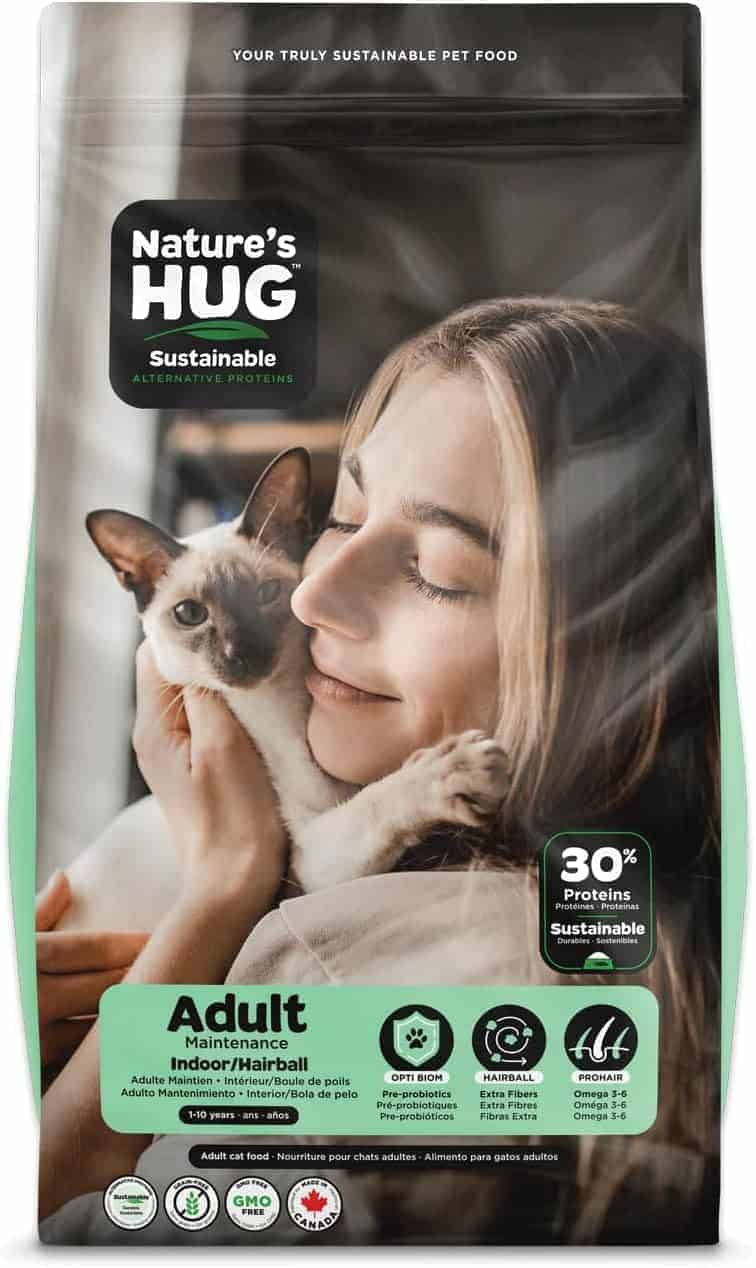
First 5 ingredients:
Dry Yeast, Whole Green Peas, Potato Protein, Canola Oil, Miscanthus Grass
Protein: 30% min
Fat: 15% min
Fiber: 9% max
Moisture: 10% max
Food Type: Dry, Pellet
Best for: Adult
Nature's HUG stands as an eco-friendly pet food brand, offering a range of vegan cat food tailored for various life stages, including 2-12 months old kittens, 1-10 years old adult cats, and senior cats above ten years. The carefully selected ingredients used in crafting these kibbles are geared towards providing cats with a healthy and enduring life.
The guaranteed analysis is shown in the box above. The protein and fat come from plant ingredients such as green peas, dried yeast, potato protein, flaxseed, apple pomace, sesame seeds, and turmeric.
Beyond its nutritional profile, this brand also incorporates prebiotics, probiotics, and postbiotics, contributing to an enhanced diet, improved microbiome health, strengthened immunity, and increased vitality for your pet. The kibbles' crunchy texture serves as a natural means of oral hygiene, with the abrasive chewing motion aiding in plaque removal from your pet's teeth.
Additionally, the inclusion of omega-3 and omega-6 fatty acids promotes the development of healthy and lustrous coats in your pet. Rest assured, the ingredients used in crafting your cat's vegan food are sourced from local yet sustainable farmers, emphasizing a commitment to both quality and environmental responsibility.
3. Benevo Adult Original

First 5 ingredients:
Soya, Wheat, Maize Gluten Meal, Corn, Rice
Protein: 27.50%
Fat: 12.50%
Fiber: 3%
Moisture: 7%
Food Type: Dry, Pellet
Best for: Adult
Benevo is a vegan pet food brand whose cat food is supplemented with nutrients such as taurine and vitamin A that cats would normally get from meat.
The formulation includes ingredients such as soya, wheat, maize, rice, sunflower oil, beet pulp, Brewer's yeast, vegetable gravy, linseed, dried seaweed, yucca extract, and minerals.
This vegan pet food is rich in vital nutrients, such as Vitamin A, vitamin D3, vitamin E, zinc, manganese, taurine, linoleic acid, linolenic acid, iron, copper, and boasting a 28% protein content. It is made for adult cats. Because it contains soya, wheat and maize, it is not a good choice for a cat with a known soy or grain sensitivity.
It also offers a cat-wet food, the Benevo Duo, which comes as a duo package suitable for both dogs and cats adhering to a vegan diet. Crafted with ingredients like carrots, sweet potatoes, oat groats, vegetable oil, brown rice, tomatoes, blueberries, cranberries, dried kelp, brewer's yeast, and peas, this wet food provides a comprehensive nutrient profile.
Crucial nutrients such as vitamins A & D3, iron, zinc, iodine, taurine, and copper are found in this formulation. Unlike the dry food, it is made without soya, wheat or dairy (it does contain oats and brown rice).
4. Wild Earth Vegan Pate

First 5 ingredients:
Water, Lentils, Potato Proteins, Canola Oil (Preserved with Mixed Tocopherols), Peas
Protein: 8.50% min
Fat: 4.0% min
Fiber: 1.5% max
Moisture: 78.0% max
Food Type: Wet
Best for: Adult
This wet food presents itself as a veterinarian-developed, plant-based feeding option for cats, featuring added essential nutrients, including taurine, DL-methionine, and a range of vitamins and minerals, to help support everyday nutritional needs.
This vegan canned food is formulated with carefully selected plant-based ingredients and nutritional supplements, including Vitamin B1 (Thiamine Mononitrate), Vitamin B2 (Riboflavin), Vitamin B6 (Pyridoxine Hydrochloride), Vitamin B9 (Folic Acid), Vitamin B12, Vitamin B7 (Biotin), Calcium Pantothenate, Vitamin D2 (Ergocalciferol), Zinc Sulfate, Ferrous Sulfate, Manganese Sulfate, and Calcium Iodate. Additional ingredients such as Yucca Schidigera Extract and L-Tryptophan contribute to its specialized formulation.
Developed by veterinary professionals with a focus on plant-based nutrition, this formula caters to pet owners seeking an alternative to conventional animal-derived ingredients. Its grain-free recipe is designed for cats whose owners prefer to avoid added grains, while the absence of synthetic preservatives and unnecessary fillers reflects an emphasis on a simpler ingredient profile.
Additionally, the inclusion of taurine is particularly important for feline nutrition, as cats require this essential amino acid to support normal vision, heart function, and other vital physiological processes. However, since cats are obligate carnivores with specific nutritional requirements, owners should ensure that the formula provides complete and balanced nutrition for their cat’s life stage before using it as a sole diet. Veterinary guidance is recommended when considering a fully plant-based feeding plan.
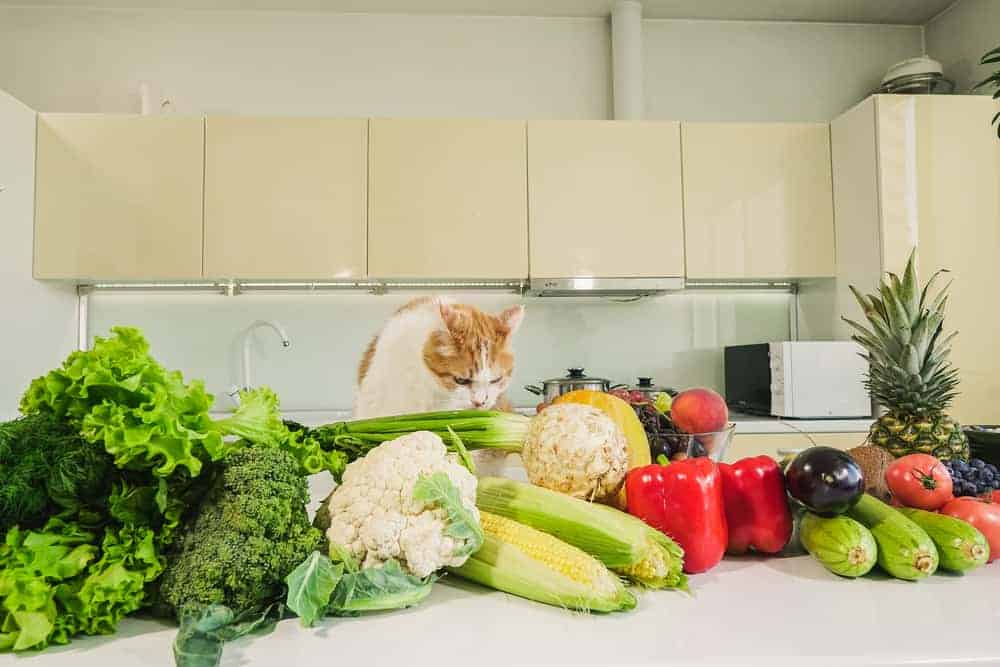
Is Vegan Diet Safe for Cats?
Cats adhere to a carnivorous diet, being classified as obligate carnivores due to their reliance on animal products for essential nutrients needed for survival. The term “obligate carnivores” means they must eat animal tissue (or a food carefully supplemented to replace it), as they cannot obtain some mandatory nutrients from grains and other plant sources.
Key nutrients for cats include significant quantities of protein, moderate amounts of fat, and minimal levels of carbohydrates, in addition to essential vitamins, fatty acids, amino acids, and minerals. While wild cats secure these nutrients through hunting prey, domesticated cats typically consume commercial cat food to meet their dietary requirements.
Having gained insight into the nutritional needs of cats, it becomes evident that vegan cat food may not align with their natural diet. The question that arises is whether it is a safe alternative. Let's examine the available research.
In a 2015 study assessing 24 vegetarian canned and dry foods for dogs and cats, 25% did not meet the AAFCO minimum nutrient requirements for pet food. When queried about providing evidence to substantiate the nutritional adequacy of their products, 5 out of 12 companies chose not to respond.
Among those that did respond, the answers varied. While all respondents claimed that independent testing verified the nutritional completeness of their foods, none supplied specific details or the results of such independent laboratory testing.
The European pet food federation FEDIAF advises owners to think very carefully before giving a cat a vegetarian or vegan diet and to get advice from a vet or veterinary nutritionist first. It notes that taurine deficiency can lead to blindness and heart failure, that arachidonic acid comes only from animal sources, and that cats cannot make enough vitamin A from the beta-carotene in vegetables.
Is Vegan Cat Food Nutritionally Complete?
Feeding cats requires a tailored approach, acknowledging the absence of a one-size-fits-all solution. I've encountered cats that take pleasure in consuming pureed vegetables, although my own cat, Shadow, was never inclined to be so accommodating.
A spoonful of veggies wouldn't tempt him, even if a lifetime supply of catnip was offered. Interestingly, Shadow exhibited a fondness for something many cats typically avoid—he had a particular affinity for fruit.
Whether it was apples, bananas, cherries, or even blueberries, Shadow eagerly devoured them. As long as I broke up the fruit and hand-fed it to him, he reveled in the experience.
However, it's crucial to recognize that fruit alone cannot fulfill all the nutritional requirements of a cat. Merely finding vegan foods that your cat enjoys is insufficient; constructing a diet that ensures comprehensive nutrition is essential.
Meeting the challenge of providing adequate vegan nutrition for cats requires careful consideration and planning.
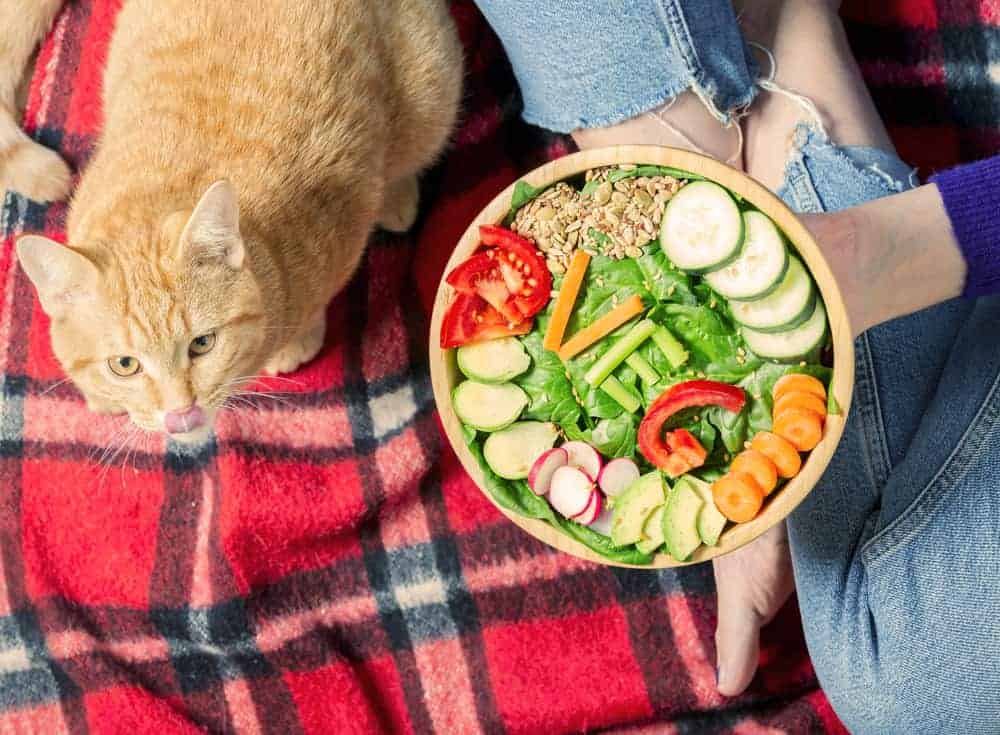
Vegan Cat Food Benefits
Supporters of plant-based cat food point to the benefits below. Keep in mind that most are not backed by good feline studies.
Weight Management: Some plant-based cat foods are lower in fat and higher in fiber, which may help with weight control, but the same is true of many meat-based weight-control foods.
Sensitivities: Vegan cat foods contain no meat or dairy, which could suit a cat with a confirmed allergy to those ingredients. But soy, wheat and corn, common in vegan foods, can trigger food allergies too, so a vet-supervised elimination diet is the usual way to find and manage a food allergy.
GI Issue Management: Some cats with gastrointestinal problems such as inflammatory bowel disease (IBD) react to particular food proteins. Vets usually manage this with a hydrolyzed-protein or novel-protein veterinary diet rather than a vegan food, so talk to your vet before changing the diet of a cat with IBD.
Ethics and Sustainability: A vegan diet, being entirely plant-based, stands out as a more eco-friendly and ethically sustainable choice when compared to both a vegetarian and a conventional diet.
Risks of Feeding Your Cat Vegan Food
Insufficient protein intake can result in stunted growth, muscle atrophy, weakened immune function, and issues with skin and coat health.
Inadequate levels of arachidonic acid can result in deficient growth, issues with the coat and skin, and the development of a fatty liver.
Deficiency in Vitamin B1, also known as thiamine, is linked to neurological problems. Thiamine plays a crucial role in the functioning of the nervous system, and its deficiency can lead to various neurological issues.
Taurine deficiency can result in serious health issues, including dilated cardiomyopathy (DCM), a type of heart disease, and retinal degeneration that can lead to blindness.
Lack of Vitamin A in the diet can lead to several health issues, including skin problems, mouth sores, and impaired night vision.
Insufficient supply of Vitamin B3, also known as niacin, can result in diverse health issues, including skin problems, dementia, and diarrhea.
Deficit in Vitamin B12 can lead to various health issues, including inadequate growth, weight loss, diarrhea, vomiting, and neurologic dysfunction.
Parting Words
Cats are inherently carnivorous animals, yet some vegan pet owners may consider transitioning their pets to a plant-based diet. It's crucial to approach such a dietary shift with caution due to potential health risks stemming from essential nutrient deficiencies.
We've listed four plant-based cat foods above. Home-made vegan meals are not a safe way to save money: a vegan diet is very hard to balance for a cat without expert formulation. Whatever you choose, it's imperative to consult your local veterinarian before making any dietary changes for your pet.
Ultimately, the key takeaway is to avoid imposing a vegetarian diet on your cat without considering their specific nutritional needs.
For other foods cats should and shouldn't eat, see our Can cats eat…? guide and our list of foods that are dangerous to cats.
Sources
- FEDIAF: Vegetarian diets for dogs and cats
- Scimex: Expert reaction to the 2023 vegan cat food survey
- Kanakubo et al. 2015, JAVMA: vegetarian diets for dogs and cats
- Small Door Veterinary: Vegetarian and vegan diets for cats and dogs




